
Restaurant Deep Cleaning
Periodic deep cleaning addresses built-up soil in kitchens and other agreed areas, including accessible spaces that routine janitorial work may not fully cover.
Serving Atlanta, Georgia & surrounding areas
Open 24/7
Keep dining rooms, kitchens, restrooms, floors, and hard-to-reach surfaces ready for staff and guests with a cleaning scope built around your operation.
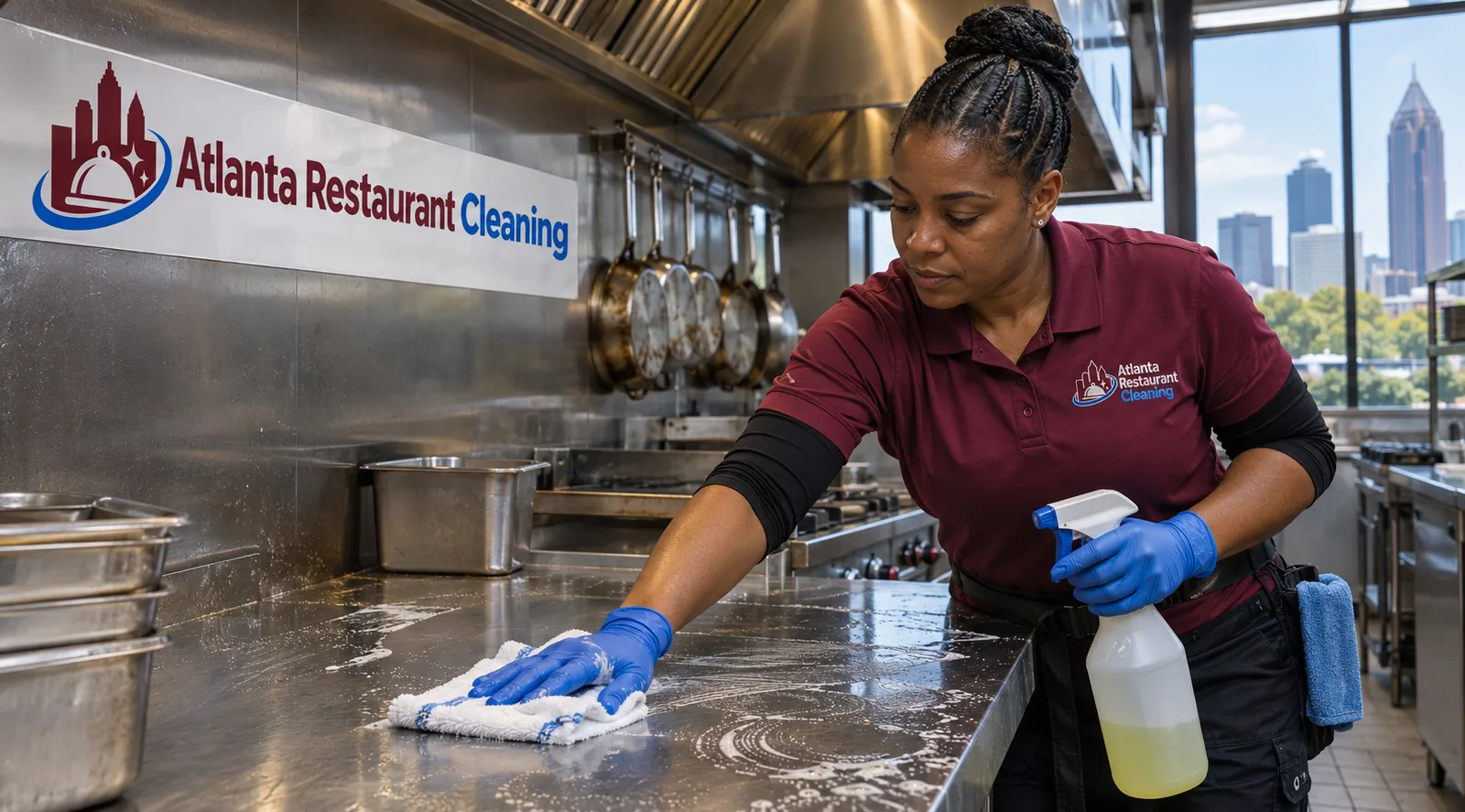
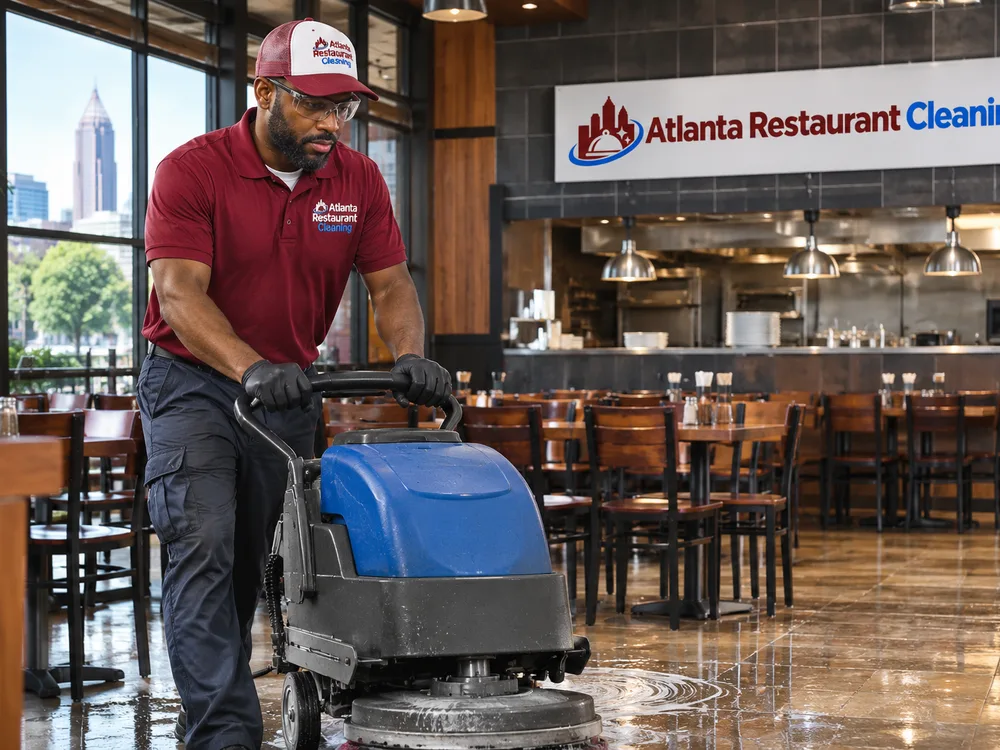
Restaurant cleaning requires more than a general wipe-down. Grease settles on floors and equipment exteriors, crumbs collect beneath fixtures, and frequent guest traffic leaves dining areas and restrooms needing consistent attention. Atlanta Restaurant Cleaning develops practical scopes for front-of-house and back-of-house spaces, with attention to food-contact boundaries and the equipment that cleaning crews may safely access.
Work can cover dining rooms, service stations, restrooms, kitchen floors, exterior equipment surfaces, baseboards, doors, reachable vents, and other agreed areas. The scope should state what receives routine attention, what needs periodic deep cleaning, and which tasks require specialized kitchen service. Clear responsibilities help managers assess completed work and avoid gaps between shifts.
Defined scopes for restaurant kitchens, guest areas, floors, detail work, and operating schedules.
Periodic deep cleaning addresses built-up soil in kitchens and other agreed areas, including accessible spaces that routine janitorial work may not fully cover.
Coordinated care for dining areas, service stations, restrooms, and kitchen work zones helps maintain a consistent standard across the property.
Night cleaning supports recurring janitorial needs after service, when crews can work through agreed areas with less interference from guests and staff.
Restaurant cleaning in Decatur covers kitchens, dining spaces, and restrooms, with scopes based on the property's layout and operating schedule.
Restaurant cleaning in Dunwoody includes detailed care for agreed equipment exteriors, kitchen surfaces, dining areas, floors, and restrooms.
Cleaning plans for Smyrna restaurants can address routine janitorial work and scheduled detail cleaning across guest and staff areas.
Restaurant cleaning in Roswell supports front-of-house presentation and back-of-house sanitation through a clearly defined scope.
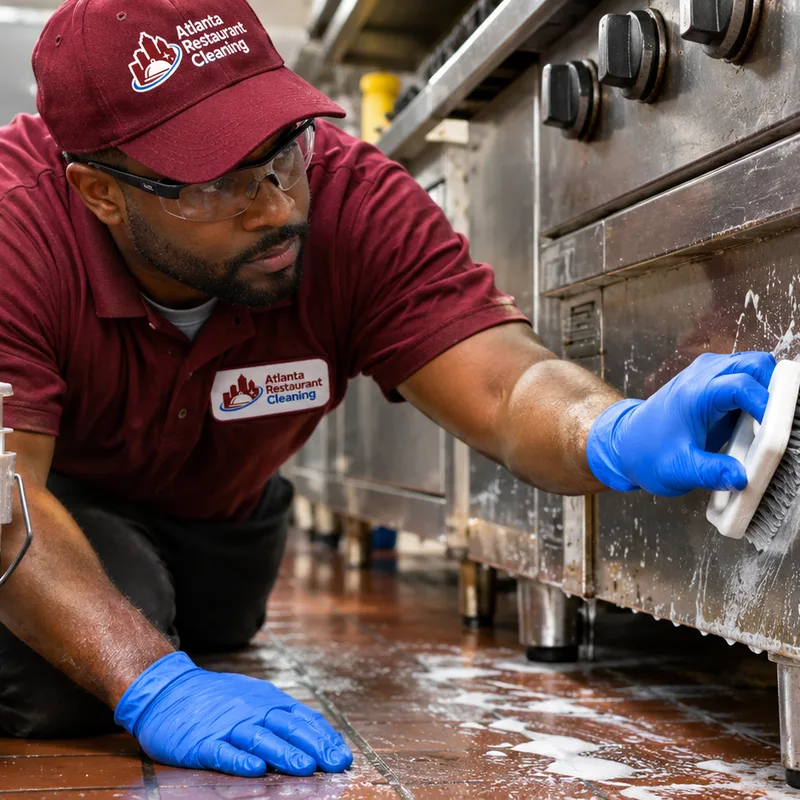
Detailed cleaning for working commercial kitchens, including accessible prep areas, equipment exteriors, walls, and other surfaces where grease and food residue accumulate.
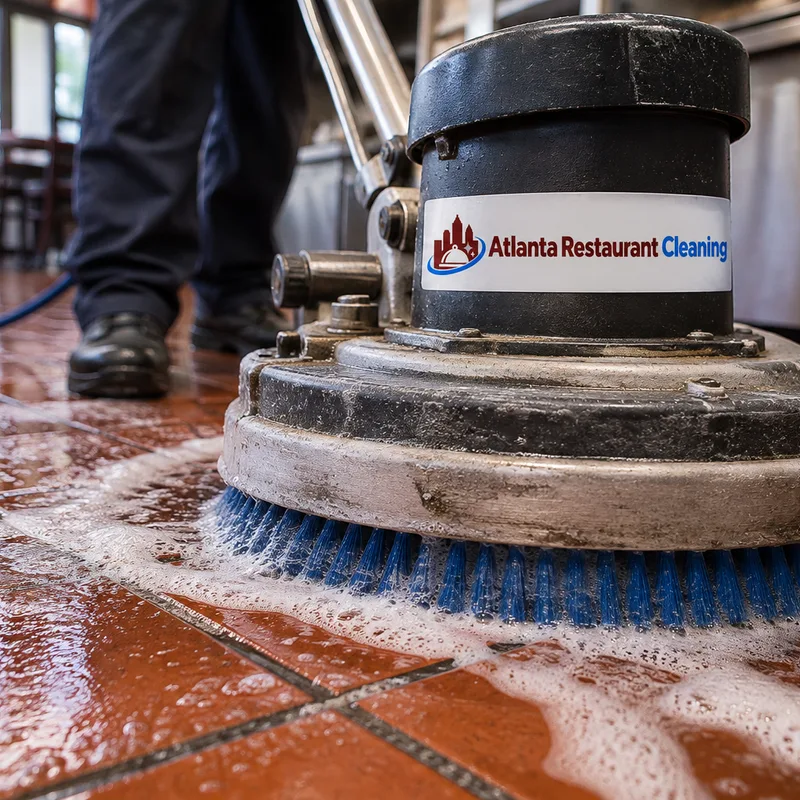
Degreasing and detailed floor cleaning target soil along traffic lanes, edges, corners, and accessible areas beneath movable items.
High dusting in Marietta removes settled dust from accessible overhead ledges, pipes, vents, and other elevated surfaces within the agreed scope.
Cooking residue can migrate beyond the immediate line. Cleaning targets accessible floors, walls, prep surfaces, and equipment exteriors with methods suited to the surface and the type of buildup.
Dining floors, tables, service stations, doors, baseboards, and other visible touchpoints shape the room guests enter. A defined checklist keeps these areas from being overlooked during busy operating weeks.
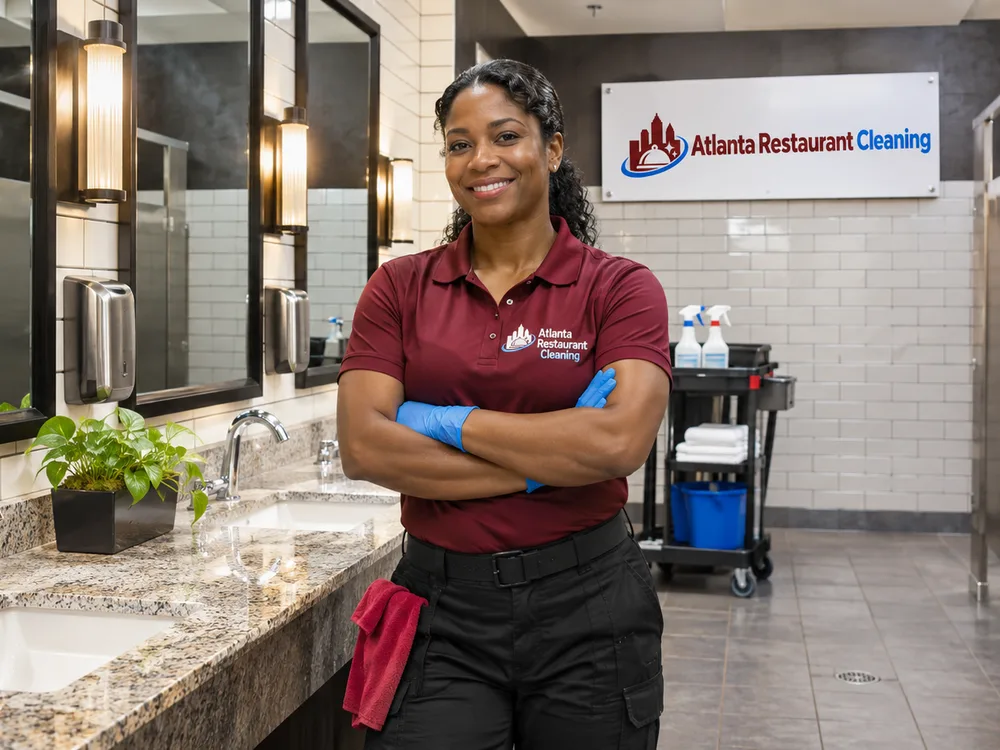
Restroom service can include fixtures, partitions, mirrors, counters, floors, dispensers, and touchpoints. The agreed plan separates regular cleaning duties from periodic detail work around edges, grout, and buildup.
Restaurant floors face tracked soil, spills, and grease. The cleaning approach should account for tile, grout, resilient flooring, edges, corners, drainage areas, and any manufacturer guidance that applies.
A written scope identifies included rooms, surfaces, frequencies, access requirements, and exclusions. This gives managers a practical reference when reviewing service and requesting changes as operating needs develop.
Atlanta Restaurant Cleaning provides restaurant cleaning in Atlanta, Georgia.
The company is based at 299 Peters Street Southwest, Unit 4, Atlanta, GA 30313. Its work centers on the spaces restaurants rely on each day, including kitchens, dining rooms, floors, restrooms, and agreed high surfaces.
A useful cleaning plan begins with the actual property. Layout, surface materials, cooking volume, buildup, equipment placement, staff access, and operating hours all affect the scope. Managers should know which tasks are included, how often they are performed, and what preparation is needed before cleaners arrive. That clarity supports better coordination between restaurant staff and the cleaning crew.
Restaurant cleaning in Atlanta typically costs about $0.10 to $0.30 per square foot for recurring janitorial care, while detailed or first-time deep cleaning may run about $0.25 to $0.75 per square foot. Minimum visit charges and overnight labor can also affect the total.
Final pricing depends on square footage, service frequency, kitchen grease levels, floor condition, equipment access, restroom count, requested tasks, and whether the property needs initial corrective cleaning. The exact cost is confirmed after a walkthrough or consultation establishes the scope.
The walkthrough identifies rooms, surfaces, equipment boundaries, current conditions, access points, and areas that need routine or periodic attention.
Included tasks, cleaning frequency, timing, exclusions, and preparation requirements are documented so restaurant management and the crew share the same expectations.
Service timing is arranged around operating hours, staff closeout duties, locked areas, alarms, and any items that must be moved before work begins.
The crew follows the agreed task list, and the scope can be reviewed when the layout, menu, traffic, or cleaning priorities change.
Get a written restaurant cleaning scope based on your kitchen, dining areas, operating hours, and current conditions.
Call for a Free QuoteAtlanta Restaurant Cleaning works with restaurant properties in Atlanta and serves nearby metro communities through dedicated local service pages.
Hotels, event venues, offices, and attractions create changing guest traffic, so restaurants here need dependable care for dining rooms, entrances, restrooms, and kitchen floors.
Dense blocks of restaurants, offices, residences, and arts venues can produce long service days that leave limited windows for detailed cleaning after closing.
Restaurants range from neighborhood dining rooms to large hospitality properties, with guest-facing floors, glass, restrooms, and service areas requiring consistent presentation.
Restaurants around mixed-use developments and established commercial corridors often combine busy dining rooms, patios, compact kitchens, and high foot traffic.
Historic commercial buildings and newer food businesses can have varied floor materials, tight back-of-house layouts, and edges where detailed cleaning matters.
Independent restaurants and late-night venues often operate in compact spaces where coordinated cleaning helps crews address dining, restroom, and kitchen areas efficiently.
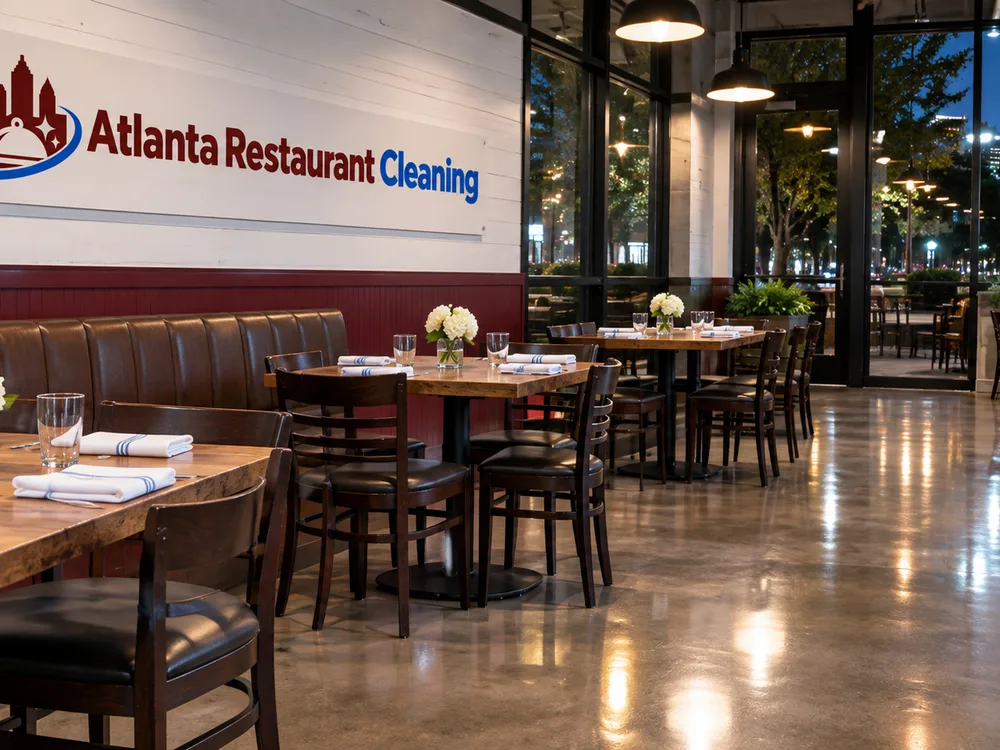
Yes, restaurant cleaning can be planned for overnight or other off-hours service when included in the agreed schedule. Access procedures, alarms, keys, staff closeout duties, and restricted areas should be documented before the first visit.
A plan can include dining rooms, restrooms, service stations, kitchen floors, accessible prep surfaces, equipment exteriors, baseboards, doors, and agreed overhead areas. The final checklist identifies exact surfaces, frequencies, and exclusions.
Recurring janitorial care can be scoped around the restaurant's operating pattern and cleaning needs. Routine tasks and periodic deep-cleaning items should be listed separately so managers can see what is completed on each visit.
Staff should complete the preparation listed in the service scope before the crew arrives. This may include storing food, clearing designated surfaces, securing personal items, cooling equipment when required, and providing safe access to agreed areas.
Exhaust hood and duct work should be treated as a separate specialized scope unless it is expressly listed in writing. A standard janitorial plan may cover accessible exterior surfaces, but internal exhaust-system cleaning requires appropriate methods and access.
Start with the restaurant address, approximate size, requested areas, preferred frequency, operating hours, and current condition. A walkthrough or consultation can then establish access requirements and a written scope for the property.
Describe your property, cleaning priorities, and preferred schedule to receive a scope built around the way your restaurant operates.