
Commercial Kitchen Cleaning
Cleaning may include cookline surfaces, backsplashes, prep areas, sinks, shelving exteriors, walls, and accessible areas around equipment. Products and methods are selected for the surface and the type of residue present.
Serving Atlanta, Georgia & surrounding areas
Open 24/7
Detailed kitchen, equipment, dining room, and back-of-house cleaning planned around your operating hours.

Restaurant Cleaning Dunwoody businesses can rely on should address the areas that affect daily operations: cooking lines, prep surfaces, floors, equipment exteriors, dining rooms, restrooms, and staff areas. Atlanta Restaurant Cleaning creates a written scope based on your layout, soil levels, operating schedule, and priorities. That scope helps managers know what will be cleaned during each visit and which periodic tasks require separate scheduling.
Our work is led by an experienced restaurant team in Atlanta, GA that understands the practical demands of food-service spaces. We plan around opening, closing, prep, and delivery windows so cleaners can work thoroughly without obstructing employees. Whether the restaurant is near Perimeter Center, along Ashford Dunwoody Road, or close to Dunwoody Village, access instructions and security procedures are established before service begins.
Routine cleaning can be scheduled at a frequency suited to the restaurant rather than forced into a generic package. A high-volume cooking line may need frequent degreasing, while a dining room may call for regular floor care and detail work around booths, chair legs, baseboards, and entrance glass. Periodic deep cleaning can address buildup that ordinary shift cleaning does not remove.
Cleaning may include cookline surfaces, backsplashes, prep areas, sinks, shelving exteriors, walls, and accessible areas around equipment. Products and methods are selected for the surface and the type of residue present.
Floors, tables, seating, ledges, partitions, doors, and entrance glass receive attention according to the agreed scope. Detail work targets crumbs, fingerprints, dust, and soil around edges and furniture bases.
Food debris and grease can migrate beyond the cookline. Crews use appropriate vacuuming, mopping, scrubbing, and edge-cleaning methods for tile, resilient flooring, sealed concrete, or other restaurant floor materials.
Fixtures, partitions, mirrors, counters, touchpoints, floors, and dispensers can be cleaned and restocked when supplies are provided. Break areas and locker spaces may also be included.
The scope can include interior bin cleaning, liner replacement, waste transfer to the designated collection area, and wiping frequently handled surfaces such as door hardware and switches.
Periodic work addresses corners, baseboards, wall splatter, furniture undersides, movable equipment areas, and other accessible places that require more time than a routine visit allows.

Restaurant Equipment Cleaning Dunwoody operators request often focuses on grease, carbon residue, food splatter, dust, and debris that gather on and around commercial appliances. We can clean accessible equipment exteriors, control surrounds, sides, legs, casters, shelving, splash zones, and the floor beneath movable units. Each item is reviewed for material type, temperature, electrical components, and manufacturer care restrictions before work starts.
Stainless steel requires a suitable cleaner, non-scratching tools, and wiping with the grain. Painted finishes, aluminum, rubber seals, glass, and plastic controls may require different products. Applying one strong degreaser everywhere can discolor a finish or damage labels, so chemical choice and dwell time matter. Sensitive components are not saturated, and equipment must be cool enough to clean safely.
A cleaning scope should distinguish exterior detail cleaning from internal mechanical service. Repairs, electrical work, gas-line work, refrigeration maintenance, and appliance disassembly are separate tasks for qualified equipment technicians. Kitchen exhaust hood, duct, and fan cleaning also requires a dedicated scope and should not be assumed to be part of ordinary nightly cleaning.
We identify the type of operation, service hours, kitchen shutdown window, access requirements, floor materials, equipment priorities, and areas handled by in-house staff.
A walkthrough or detailed consultation establishes the condition of the kitchen, dining room, restrooms, equipment exteriors, and other requested areas. Heavy grease, restricted access, and movable equipment are noted.
The plan states which tasks are routine, which are periodic, and what is excluded. It also sets the service frequency and practical expectations for the available cleaning window.
Crews follow site access rules, place needed caution signs, use surface-appropriate products, and work through the agreed task list. Cleaning proceeds in an order that limits cross-contamination between restrooms, dining spaces, and food-service areas.
Completed work is checked against the scope. If traffic, menu changes, seasonal demand, or kitchen buildup changes the workload, the plan can be updated before the next service cycle.
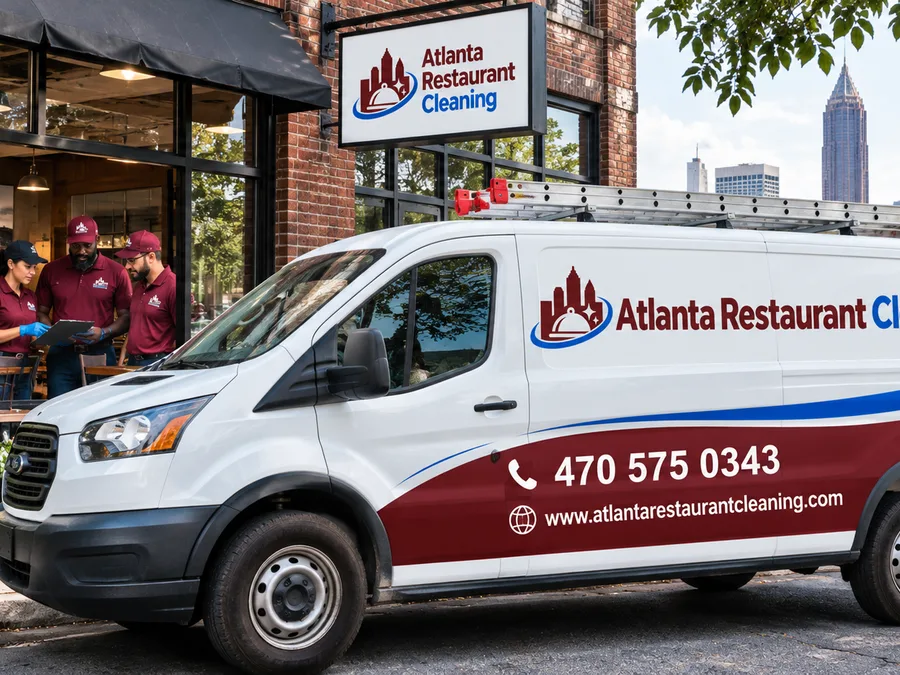
Dunwoody restaurants operate in several distinct commercial settings. Perimeter Center properties may involve loading docks, elevators, parking decks, building access credentials, or property management rules. Restaurants along busy corridors such as Ashford Dunwoody Road may need work timed tightly around customer traffic and deliveries. Establishments near Dunwoody Village may have smaller service areas or limited back-of-house access, making equipment movement and supply staging important parts of the plan.
Metro Atlanta's warm, humid periods can increase the amount of moisture and tracked soil entering busy dining rooms. Rainy days can also leave entrance flooring and mats requiring more frequent attention. These conditions are practical reasons to set floor and entry tasks by actual traffic rather than relying on the same checklist throughout the year.
Before the first visit, managers should share parking instructions, alarm procedures, key or credential rules, waste locations, and any surfaces with special care requirements. Clear access information preserves cleaning time and reduces disruption for opening staff.
Restaurant cleaning requires control over chemicals, tools, and work order. Product labels determine dilution, required personal protective equipment, surface compatibility, dwell time, and whether a potable-water rinse is needed on food-contact surfaces. Safety Data Sheets should be available for the products in use. Chemicals must never be mixed unless their labels specifically permit it.
Cleaning and sanitizing are separate steps. Cleaning removes food residue and grease; sanitizing follows on an already cleaned surface with an approved product used according to its label. Food, utensils, single-use items, and exposed ingredients should be removed or protected before nearby cleaning begins. Color-coded or area-specific tools can help keep restroom equipment away from kitchen and dining surfaces.
Atlanta Restaurant Cleaning works to the approved scope, but routine professional cleaning does not replace each restaurant's food-safety program, employee closing duties, pest-control service, equipment maintenance, or required specialist work. Managers remain responsible for determining which sanitation procedures and regulatory requirements apply to their operation. A clear division of duties prevents overlooked tasks and makes accountability easier.
A walkthrough and written scope can turn an inconsistent closing routine into a practical cleaning schedule with clear responsibilities.
Call for a Free QuoteRestaurant cleaning is usually priced after the size, condition, frequency, and requested tasks are reviewed. Cost changes with kitchen grease levels, floor type, equipment access, restroom count, cleaning window, and whether the work is routine or a one-time deep clean. Perimeter Center access rules, loading arrangements, or parking constraints may also affect labor time. A walkthrough allows the exact cost and scope to be confirmed before service begins.
Yes, service can often be scheduled during an agreed after-hours window, subject to crew availability and the time needed for the scope. The restaurant should provide alarm instructions, access credentials, lock-up procedures, and a contact for unexpected access issues. Equipment included in cleaning must have enough time to cool safely after kitchen shutdown.
The time depends on the restaurant's size, buildup, equipment access, and the number of areas included. A focused equipment-exterior project may fit within one shutdown window, while a larger kitchen and dining-room deep clean may require a longer visit or staged work. An on-site review produces a realistic schedule without interfering with prep or opening.
Accessible areas behind and under movable equipment can be included when movement is safe and approved in advance. Gas-connected, hard-wired, plumbed, very heavy, or fixed equipment should not be moved by a cleaning crew unless a qualified party has made it safe. Dunwoody kitchens with narrow aisles may require staged cleaning so pathways remain open.
The agreed work may include accessible appliance exteriors, sides, legs, casters, control surrounds, shelving, splash areas, and floors beneath safely movable units. Internal repairs, electrical components, refrigeration systems, gas connections, and major disassembly are excluded unless qualified specialist service is separately arranged. The written scope identifies every included item.
Yes, products can be selected for use in commercial food-service settings and applied according to their labels. The correct process depends on whether the surface is food-contact or non-food-contact, as well as its material and soil type. Food-contact surfaces may require cleaning, rinsing, and sanitizing as separate label-directed steps.
Frequency should match cooking volume, customer traffic, menu, floor conditions, and the work completed by restaurant employees. High-use cooklines and restrooms may need frequent service, while wall washing, baseboard detailing, and equipment-area cleaning can be assigned periodically. Seasonal traffic and wet-weather entry soil should be considered when setting the schedule.
Tell Atlanta Restaurant Cleaning about your operating hours, problem areas, equipment, and preferred service frequency. We will help define a practical scope and schedule for the work.